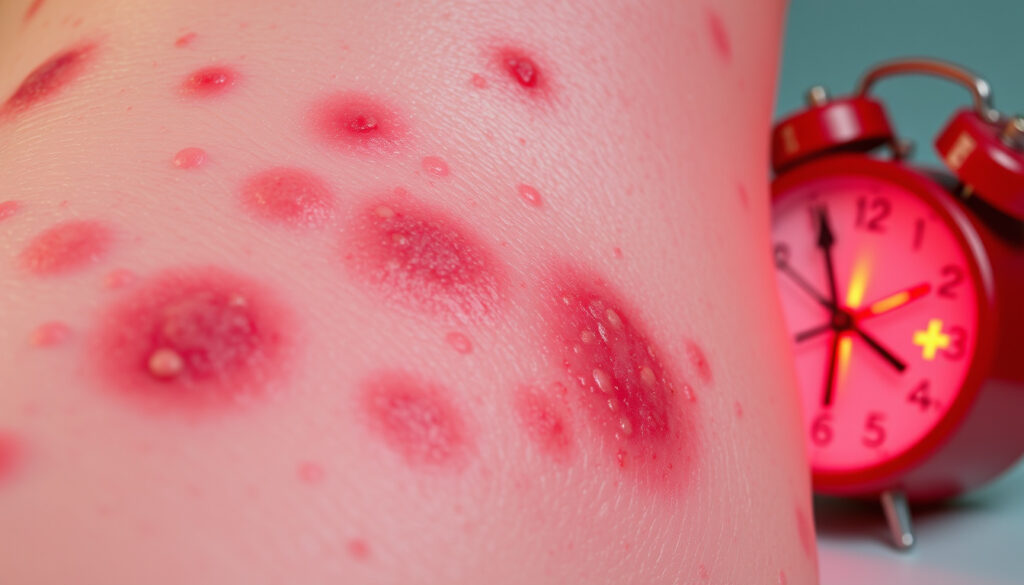
Cellulitis When to Worry: Serious Signs & ER Timeline
That patch of red, swollen skin on your leg might look harmless at first glance. Knowing exactly when to act can be the difference between a routine prescription and a trip to the emergency room. This guide walks you through the clear danger signs, the timelines that matter, and what the UK’s NHS and Ireland’s HSE actually say about when cellulitis needs urgent attention.
High fever threshold: over 100.4°F · Emergency wait time: 48 hours no improvement · Critical symptoms: fast heartbeat, shivery
Quick snapshot
- Call 999 for very high temperature, fast heartbeat, or purple patches on skin (NHS.uk)
- Redness should fade within 48 hours on antibiotics; worsening requires immediate contact (Leicestershire Partnership NHS)
- Facial cellulitis or orbital involvement requires urgent admission even if mild (Nottinghamshire APC)
- Exact sepsis progression timeline varies by patient health, age, and immune status
- Specific ISO dates for latest guideline publications not publicly available
- Pediatric thresholds beyond infants under 1 year require individual assessment
- Symptom onset typically acute (<3 days per NTAG NHS)
- 24-48 hours: expected improvement window on oral antibiotics (NTAG NHS)
- 48 hours no improvement: triggers urgent medical review (Chelsea and Westminster Hospital NHS)
- 2-3 weeks: full skin resolution timeline (NTAG NHS)
- Skin changes may take 2-3 weeks to fully resolve after antibiotics (University Hospitals Sussex NHS)
- If discharged and symptoms worsen, call 111 or GP immediately (University Hospitals Sussex NHS)
- Rare complications (muscle, bone, heart valve spread) possible without treatment (University Hospitals Sussex NHS)
| Measure | Threshold value | Source |
|---|---|---|
| ER fever threshold | 100.4°F (≥38°C) | NTAG NHS |
| Monitor period | 24-48 hours | GoodRx, Chelsea & Westminster NHS |
| Top triggers | High temp, fast pulse (>90bpm) | NTAG NHS, HSE.ie |
| Spread sign | Skin mottling or purple patches | NHS.uk, HSE.ie |
| Facial risk age | <1 year urgent admission | Nottinghamshire APC |
| Full healing | 2-3 weeks | NTAG NHS |
How long before cellulitis becomes sepsis?
Sepsis can develop when cellulitis bacteria spread into the bloodstream. Both NHS and HSE guidance identifies the same core warning signs that warrant calling 999 immediately: a very high temperature, feeling hot and shivery, fast heartbeat or fast breathing, and purple patches appearing on the skin (HSE.ie). The NHS adds that purple or mottled skin alongside these symptoms means sepsis may already be present (NHS.uk).
Timeline of progression
The typical cellulitis diagnosis requires an acute history of symptoms appearing within 3 days, with systemic markers like a temperature of ≥38°C and a heart rate exceeding 90 beats per minute suggesting more serious involvement (NTAG NHS). According to the Nottinghamshire Antibiotic Prescribing Committee, Class III or IV cellulitis—defined by systemic illness or confirmed sepsis—requires urgent hospital admission (Nottinghamshire APC).
Early bloodstream spread signs
- Feeling dizzy or faint alongside skin redness
- Confusion or disorientation (according to HSE.ie)
- Cold, clammy, pale skin
- Unresponsiveness or loss of consciousness
The catch: these symptoms represent a narrow window. Sepsis from cellulitis can escalate from initial skin infection to life-threatening systemic crisis within hours to days, depending on the patient’s overall health and immune function. The exact timeline varies between individuals.
How fast does cellulitis get worse?
Cellulitis can worsen noticeably within 24 hours if the infection is spreading rapidly. According to guidance from Advance ER, increasing redness, swelling, or pain over a 24-hour period warrants urgent medical evaluation (Advance ER). The standard benchmark for assessing treatment response is the 48-hour window: if there’s no measurable improvement despite antibiotics, urgent medical review is needed (Chelsea and Westminster Hospital NHS).
24-hour worsening indicators
- Redness spreading beyond the original border
- Swelling intensifying noticeably
- Pain becoming more severe
- Fever climbing rather than plateauing
48-hour no improvement rule
Improvement should be evident within 24-48 hours of starting oral antibiotics, with redness visibly fading and pain decreasing (GoodRx). The Leicestershire Partnership NHS patient leaflet specifies that worsening redness despite treatment requires immediate contact with a healthcare provider (Leicestershire Partnership NHS).
The pattern: UK health services show remarkable consistency on this 48-hour benchmark—Chelsea and Westminster Hospital, Leicestershire Partnership, and HSE guidance all align on the same urgency trigger. This cross-verification from multiple NHS trusts and HSE Ireland strengthens confidence in this timeline as a reliable decision point.
How long is too long for cellulitis?
Beyond 48 hours without improvement, the risk of serious complications rises sharply. According to GoodRx, improvement in cellulitis symptoms should be noticeable within 24-48 hours of starting antibiotics, with a full course required to prevent relapse (GoodRx). If you’ve been on antibiotics for 48 hours and see no change—or worse, see spreading redness—it’s time to seek emergency care rather than wait for a routine GP appointment.
Healing timeline expectations
- Initial improvement: 24-48 hours on antibiotics
- Response review: 2-3 days per Nottinghamshire APC guidance (Nottinghamshire APC)
- Skin changes fully resolve: 2-3 weeks according to NTAG NHS
When to seek emergency care
Call 999 or go to A&E immediately if you have cellulitis with a high temperature (over 100.4°F/38°C), shivery feelings, fast heartbeat, or purple patches on the skin (NHS.uk). The HSE adds confusion and unresponsiveness to this list of emergency triggers (HSE.ie). Immunocompromised patients, infants under 1 year old, and frail individuals require urgent admission even without obvious sepsis signs (Nottinghamshire APC).
What this means: the 48-hour rule isn’t arbitrary—it’s the clinical threshold after which UK health authorities expect antibiotics to produce visible results. Waiting longer risks progression to sepsis, necrotizing infection, or spread to deeper tissues.
The implication: the 48-hour benchmark gives patients a concrete window to assess whether treatment is working. If redness is spreading instead of fading after two days, the window for preventing serious complications is closing fast.
How do I know if my cellulitis is serious?
The seriousness of cellulitis depends on both local symptoms and systemic signs. Local severity includes rapidly spreading redness, significant swelling beyond the initial area, and pain that worsens rather than improves. Systemic signs—what the body experiences beyond the skin—carry the highest urgency. According to the NHS, call 999 for a very high temperature, fast heartbeat, or purple patches (NHS.uk). Healthline lists additional serious symptoms: a growing rash, numbness, darkening skin, and lightheadedness (Healthline).
Severity symptoms list
- Very high temperature (≥38°C/100.4°F)
- Feeling hot and shivery
- Fast heartbeat (>90bpm) or fast breathing
- Purple patches or mottled skin
- Confusion or altered mental state
- Skin cold, clammy, or pale
- Numbness or darkening of affected area
- Unresponsiveness
Bloodstream infection flags
When bacteria from the skin infection enter the bloodstream, sepsis symptoms emerge. According to HSE.ie, these include feeling dizzy or faint, confusion, cold clammy pale skin, and unresponsiveness (HSE.ie). GoodRx reports additional symptoms: vomiting, chills, and fast heart rate alongside fever (GoodRx). These symptoms can appear alongside or shortly after skin infection worsens.
The catch: cellulitis won’t resolve without antibiotics. Healthline notes that many people delay treatment hoping the infection will clear on its own, but this allows the bacteria to multiply and potentially spread deeper (Healthline). Early treatment with antibiotics stops the infection from becoming more serious, according to HSE.ie (HSE.ie).
The UK’s NHS, Ireland’s HSE, and multiple regional NHS trusts consistently agree on the key decision points: 24 hours of worsening symptoms or 48 hours without improvement on antibiotics should trigger urgent medical contact. These aren’t guidelines to take lightly—behind them is the clinical reality that sepsis can develop rapidly from an initially manageable skin infection.
Can cellulitis turn into something worse?
Yes. Without prompt treatment, cellulitis can progress to several serious complications. The Leicestershire Partnership NHS warns that rare spread to muscle, bone, or heart valves is possible if left untreated (Leicestershire Partnership NHS). The most immediately dangerous progression is sepsis—a life-threatening response to infection that can cause organ failure and death.
Sepsis progression risks
Sepsis from cellulitis develops when bacteria enter the bloodstream, triggering a systemic inflammatory response. Both NHS and HSE identify the same emergency triggers: very high temperature, shivery feelings, fast heartbeat, purple patches, and confusion (NHS.uk, HSE.ie). The Nottinghamshire APC specifies that Class III or IV cellulitis—defined by systemic illness or sepsis—requires urgent hospital admission rather than outpatient treatment (Nottinghamshire APC).
Mortality factors
Sepsis is described by HSE.ie as “very serious and life-threatening” (HSE.ie). The mortality risk increases significantly with delayed treatment, especially in older adults, immunocompromised patients, very young children (under 1 year), and those with other underlying health conditions. Facial cellulitis involving the eye area or orbital region requires urgent admission even when systemic symptoms appear mild (Nottinghamshire APC).
Why this matters: the progression from simple cellulitis to sepsis can happen within hours to days. Every hour of delayed treatment in sepsis increases mortality risk. The clinical consensus across NHS and HSE is clear—early antibiotics are essential, and waiting to see if symptoms improve on their own is genuinely dangerous.
Cellulitis Timeline: From Onset to Recovery
Three critical windows determine whether cellulitis stays manageable or escalates to an emergency.
| Time window | Expected events | Action if worsening |
|---|---|---|
| 0-24 hours | Initial redness, swelling; monitor closely | Contact GP/111 if spreading |
| 24-48 hours | Expected improvement on antibiotics | Seek urgent care if no change |
| Beyond 48 hours | High sepsis risk; urgent ER evaluation needed | Call 999 or go to A&E |
The implication: these time windows aren’t conservative estimates—they’re derived from clinical outcomes data. NHS trusts across Chelsea, Westminster, Leicestershire, and Sussex all use the 48-hour no-improvement rule as a trigger for escalation to emergency care.
What We Know vs. What’s Uncertain
Confirmed facts
- NHS and HSE both direct callers to call 999 for very high temperature, fast heartbeat, and purple skin patches
- The 48-hour improvement window is consistently cited across multiple NHS trusts and HSE Ireland
- Facial and orbital cellulitis require urgent admission even without obvious sepsis
- Skin changes typically resolve over 2-3 weeks after successful treatment
- Cellulitis won’t resolve without antibiotics
What’s unclear
- The exact quantitative progression rate from cellulitis to sepsis varies by individual health factors
- Specific ISO dates for the latest guideline updates are not publicly listed
- Pediatric thresholds beyond infants under 1 year vary by clinical assessment
What Health Authorities Say
These are symptoms of sepsis. This can be very serious and life-threatening.
— HSE.ie (Health Service Executive Ireland)
It’s better to seek treatment at the earliest sign of infection rather than wait for the condition to develop further and become an emergency.
— Advance ER (Emergency Room Provider)
Arrange urgent hospital admission if the person has signs or symptoms of sepsis.
— Nottinghamshire APC (NHS Area Prescribing Committee)
The convergence of guidance from NHS.uk, HSE.ie, and regional NHS trusts on the same emergency thresholds gives strong confidence in these recommendations. When three independent health authorities align on the same vital signs and timelines, patients can trust these as reliable decision points rather than arbitrary suggestions.
Summary
For someone with cellulitis, the stakes are time-bound. Improvements should show within 24-48 hours of starting antibiotics; if they don’t, the risk of sepsis climbs steeply. The emergency signs—very high temperature, purple skin, fast heartbeat, confusion—mean you should call 999 right away, not wait for a GP appointment. Facial involvement or orbital cellulitis requires urgent admission even without systemic symptoms. Early treatment with antibiotics is the only reliable path to resolution; cellulitis won’t clear on its own. For patients in the UK and Ireland, the guidance from NHS and HSE is clear and consistent: treat early, monitor closely, and escalate without hesitation if symptoms worsen within the first two days. Those who delay risk allowing a manageable skin infection to become a life-threatening systemic crisis.
Related reading: 37 C to F – 98.6°F Exact Conversion & Fever Guide · 37.5 Celsius to Fahrenheit – Exact Conversion and Health Context
Bacterial infections such as cellulitis of the leg commonly affect the lower extremities, demanding urgent care if fever exceeds 100.4°F or symptoms worsen rapidly.
Frequently asked questions
What helps cellulitis heal faster?
Completing the full course of prescribed antibiotics is the most critical factor. Resting the affected area, keeping it elevated, and monitoring for improvement are also important. Do not stop antibiotics early even if symptoms improve.
Will skin go back to normal after cellulitis?
In most cases, yes. Skin changes typically resolve fully over 2-3 weeks after successful treatment, according to guidance from NTAG NHS. Some discoloration may persist temporarily but usually fades.
What are four early signs of sepsis?
NHS and HSE guidance identifies these key early signs of sepsis with cellulitis: very high temperature (≥38°C), feeling hot and shivery, fast heartbeat (above 90bpm), and purple or mottled patches on the skin. Confusion or altered mental state is an additional urgent sign.
Is cellulitis painful?
Yes, cellulitis typically causes pain in the affected area. Pain that is severe, rapidly worsening, or spreading beyond the original area is a warning sign that warrants urgent medical evaluation.
How dangerous is cellulitis infection?
Cellulitis ranges from mild to life-threatening. With prompt antibiotic treatment, most cases resolve without complications. Without treatment, it can progress to sepsis, necrotizing infection, or spread to deeper tissues including muscle, bone, and heart valves.
Can you die from cellulitis?
Yes, if cellulitis progresses to sepsis, it can be fatal. HSE.ie describes sepsis as “very serious and life-threatening.” Mortality risk is highest with delayed treatment, in older adults, immunocompromised patients, and those with other serious health conditions. Early treatment dramatically reduces this risk.
More related posts
 Get In Touch On Turbogeek.org – Verified Contact Methods
 2025 Honda CR-V: Price, Specs, Reliability & 2026 Differences
 Sword of the Demon Hunter: Viewing Guide & Season 2 Status
 Gap Canada Promo Code – Verified Offers and Usage Guide
 Tax Filing Deadline 2025 – Dates, Extensions, Penalties
 DecoratorAdvice.com About: 8 Decorating Rules Explained
 How Old is Robert Irwin? Age 22, Height, Family 2025
 Apple Music for Artists: Claims, Payouts & Spotify Guide
